How To Explain Treadmill Electricity To Your Grandparents


Treadmill Electricity
Although treadmills aren't as energy-intensive as other appliances, such as washing machines or air conditioners, their electricity consumption still adds to your home's overall energy bill. It is important to understand how treadmills use energy to make informed choices regarding your purchase.
Find the treadmill's wattage ratings in the user's manual or on its label. Multiply the wattage rating by the number of hours per week you use the treadmill.
Origins
Treadmill electricity is a component of your total power consumption when you use fitness equipment. Certain factors affect how much your treadmill consumes its power, such as the size of the motor and the speed you exercise at. You can reduce the amount of energy used by your treadmill by turning it off when you're not working out and maintaining it regularly for optimal performance. You can also cut down on the energy usage of your treadmill by running on an incline instead of flat.
Treadmills can be used for work and leisure. They were originally used as a punishment for prisoners forced to work. They would constantly walk on the hamster wheels, generating power to run machines that ground grains or powered water pumps. These early models, despite being mostly utilitarian, were not free of flaws. Prisoners often died from heat stroke or other ailments as a result gruelingly working on the machines.
Modern treadmills are not only utilitarian machines. They can generate energy while being utilized. discounted treadmills like the Verde by SportsArt convert the energy generated when you run or walk and store it in batteries. When the battery is fully charged and fully charged, you can use it to power small appliances like a fan or light.
The type of treadmill you choose will have an impact on the amount of power it consumes. For instance, treadmills designed for high-intensity workouts have larger motors, which require more power to move the belt. The speed of the treadmill and the incline settings will impact the power consumption of your treadmill. Exercises that are intense will require more energy so you should be aware of your treadmill's power consumption to ensure it doesn't exceed your budget.
Can you really make enough energy from a treadmill exercise to power an appliance? Yes but not significantly. A trained athlete can produce up to 3/4 HP, or about 500-600 watts in common electrical terms. This is enough power to power a laptop or a small fan but not enough to run an entire household.
Motors
If your treadmill is electric, it depends on motors to convert electrical energy into the kinetic energy required to move the belt. Most treadmills that are electric have two motorsone drive motor and an incline motor. The quality of each will affect your workout experience and longevity So pay attention to the specifications listed for these parts when buying your treadmill.
The horsepower (HP) is the most important spec for treadmill motors. This measurement shows how much power a motor can produce when it is at its maximum. It's easy to be lured by a high HP rating. However continuous duty (CHP) is a more accurate measure. It's the longest duration that a motor will run at its best without overheating. Treadmills with an increased CHP rating are generally more durable than those with lower ratings, and will last longer before you have to replace them.
When deciding on what kind of motor you want to purchase be sure to consider the purpose for which you intend to use it and budget. In general, larger and better-quality motors will need more money to purchase and run. This cost can, however, be offset by reducing the cost of energy. If you are considering a time-of-use-rate plan which charges different rates throughout the day, it's even more important to concentrate on the treadmill's energy use.
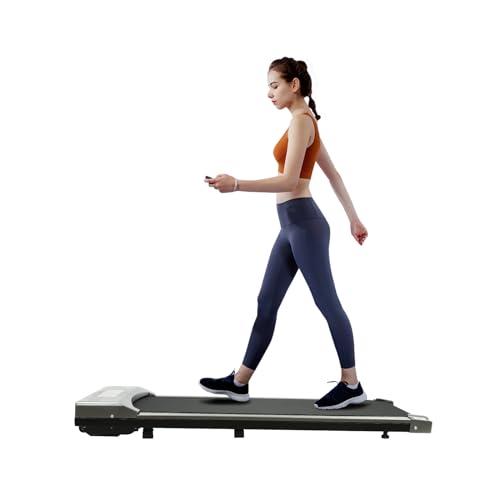
It is important to ensure that you do not share your home's electric power with other appliances on the same circuit. This could cause your treadmill to break a circuit breaker and it could cause damage to it. Instead, choose a dedicated outlet for your treadmill and make sure it's properly wired.
The motors in your treadmill utilize AC or DC electricity to turn a crank which is driven by the belt. The AC motors are more expensive however they offer smoother operation and faster response to changes in speed or anincline. A treadmill that has a high-quality DC motor will also decrease noise levels and maintenance requirements. If you're not sure what kind of motor to purchase check out the warranty of the manufacturer and compare the prices of models that have similar features to determine the best match.
Electronics
The electronic components inside the treadmill are responsible for controlling the motor. The controls make use of switches, potentiometers, and PCB electronic components that regulate the speed and force of the motor. This allows the treadmill to mimic running, walking and running workouts. Treadmills with incline settings can also adjust the motor's speed and force to simulate running uphill.
The size of the motor on the treadmill and the settings for the console could all affect the electricity consumption. The treadmill belt will require more power to move if the person is heavier. Treadmills that simulate running uphill consume more energy than treadmills without this feature. Setting the console's settings to higher will increase energy consumption, as well.
In general, treadmills use more energy when people are running faster and for longer durations. The treadmill's calorie counter as well as other features can also boost energy consumption.
It is possible to generate enough the kinetic energy of walking to charge a phone, but the process will be slower than simply charging the phone with an USB cable. However it will work with any standard cellphone, regardless of the operating voltage.
Treadmill owners can reduce the amount of electricity used by their treadmill by shutting off the treadmill when it is not in use. They should also look for signs of wear and tear on the machine, which could cause it to consume more power than is needed.
You can also lower the electricity consumption of your treadmill by using it during "off-peak times" which are usually during the night. These are the times when electricity rates are lower. This can save money, especially when the homeowner is on a time-of-use rate plan, which has different rates for usage at different times of the day. Additionally, homeowners can invest in solar panels to generate their own clean energy. This will reduce the need for grid electricity, and the fluctuating prices of electricity. This can result in significant financial savings in the long term for the homeowner.
Workouts
You can run, walk or jog indoors on treadmills and ellipticals. This lets you stay fit even when the weather isn't ideal. These fitness equipments consume electricity to run their motors and their displays, but the amount they use can differ based on the frequency and how long you workout. You can calculate the treadmill's energy consumption by examining its wattage rating, which is usually printed on the user manual or label for the machine. Multiply this number by the average amount of time you use it in a day, then divide by the number of days in a month. This will give you the energy consumption per day in kilowatt-hours (kWh). Then multiply the number of kWh used by your utility provider's cost-per-kilowatt-hour rate to figure the total cost of operating your fitness equipment.
Other factors can impact the amount of electricity a treadmill consumes, including the speed and incline settings you choose. When you run at higher speeds, you require more power from the treadmill's motor, and the incline setting simulates uphill running, which increases energy consumption. The amount of energy used by the treadmill is also dependent on the user's weight, since the motor has to work harder to move the belt that is heavier.
A well-maintained treadmill can also reduce its energy consumption. Make sure to check the lubrication of the belt regularly to ensure that it's properly oiled and replace worn or damaged bearings to avoid excessive wear and tear on the motor. Consider upgrading to a treadmill that has an energy-efficient motor if you plan to use it for long periods of time.
Most treadmills use electricity even when they are not being used, so be sure to shut them off or at the very least unplug them after you've finished exercising. Letting them remain connected and running in the background can add to your household's overall energy bill, particularly when you own a high-wattage treadmill. You can cut down on unnecessary energy use by using a smart plug or a more energy-efficient treadmill that will automatically shut off your treadmill. If you want to reduce static electricity that can build up between your body and your treadmill or elliptical, install a humidifier within the vicinity of your workout space to increase relative humidity.